7 Ways to design a comfortable and ergonomic kitchen

For many years, Blum's requirements research team has been learning how to design kitchens to meet the demands of everyday life. Thanks to our real-life kitchen observations, expert findings and extensive testing, we now have functional ideas for cabinets that offer every kitchen the full package when it comes to ergonomics and convenience.


How to plan for essential tasks
Stocking and preparing, cooking and seasoning, storing and cleaning up: explore the articles below to take a deep dive into the individual areas of a well-organized kitchen.
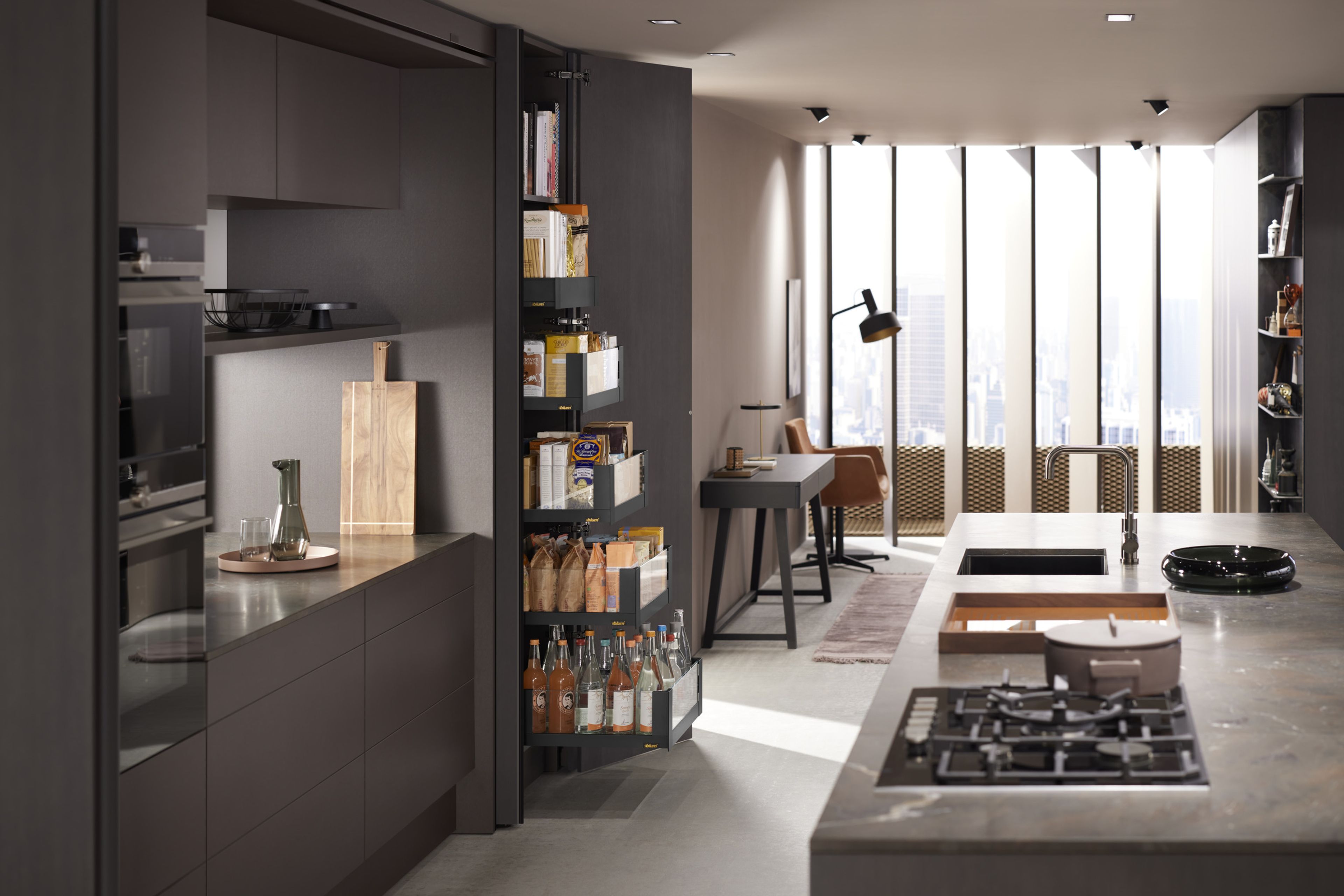
1. Plan a pantry with ultimate visibility
2. Add extra storage with a sink cabinet

3. Design a functional work surface

4. Store spices the smart way

5. Reduce clutter in the cookware cabinet

6. Rethink dish storage

7. Bring motion to upper cabinets

At a glance: kitchen cabinet organization
Well-organized kitchen cabinets in the right layout minimize back and forth time and enhance efficiency.
The most important items should be stored right where they are used. For example, knives and other kitchen utensils should be in the drawer under the main work surface, while pots and pans should be kept in the drawers under the cooktop.
From the pantry unit to the sink cabinet, drawers reign supreme. When the base kitchen cabinets are equipped with drawers instead of doors and shelves, life is much easier: no more crouching to rummage around for items at the back of the cabinet.
The goal is to thoughtfully use the available space so you can clearly see each cabinet's contents and easily retrieve stored items.


