Growing older and back again: testing for accessibility

A building steeped in history
At one time, this barn was filled with horse stalls. The hay cart brought feed and straw for the animals through the large gate. Today, this historic building is home to the Kick family; independent architect Julia Kick renovated the barn with enormous care and turned the old building into a home for her husband and children.

But can the old barn remain their home forever? Together with Blum requirements researcher Sandra, Julia wants to find out – in an experiment with the . The two plan to use the special age simulator suit to take a look into the future.
The AgeExplorer® allows Julia to experience the world of people with physical limitations. Taking a tour around her house, she can put the architecture and cabinetry to the test, specifically thinking about what it will be like to experience her home in her later years. She can see firsthand what needs to be improved so that her home is more accessible. "It won't be so bad," she laughs.

The aging transformation
"How old am I now?" Julia wants to know as she puts on the straps which simulate stiff elbows and knee joints. The answer is vague: the suit does simulate the physical limitations that typically occur with age, but everyone experiences things differently, depending on their fitness and physical condition.
"So around 20 years older," says Sandra while filling the pockets of the orange overalls with around 13 lbs of weights. Special earmuffs, glasses that simulate age-related farsightedness and a visor which restricts your field of vision complete the experience. Now she just needs to put on the arthritis gloves and Julia is ready for the experiment.


She tests various situations from her day-to-day life in her kitchen – for example, she attempts to prepare a salad while wearing the AgeExplorer®. Reaching for the salad bowl is surprisingly hard. "," groans Julia.
Even pouring coffee is unexpectedly difficult. And as she bends down to put away toys, she thinks to herself: "Even without the suit, this was strenuous. It makes you understand how important ergonomics is as we age."
Accessibility in building construction: designing a home with aging in mind
Accessibility in building construction is the technical term that came to mind during Julia's experiment; it's the art of designing a house so that people with physical limitations could live there easily and comfortably. Anyone building or renovating a home should include accessibility in the design in order to eliminate the need for makeshift solutions later.
Keep all of these aspects in mind:

"Flexibility" is the magic word when it comes to accessibility in building construction. When planning the structure, it is important to create space for future changes. Stairs, doors and closets should be wide enough to be comfortably accessible with mobility aids in the future, even if this space is initially used to store strollers or school bags.
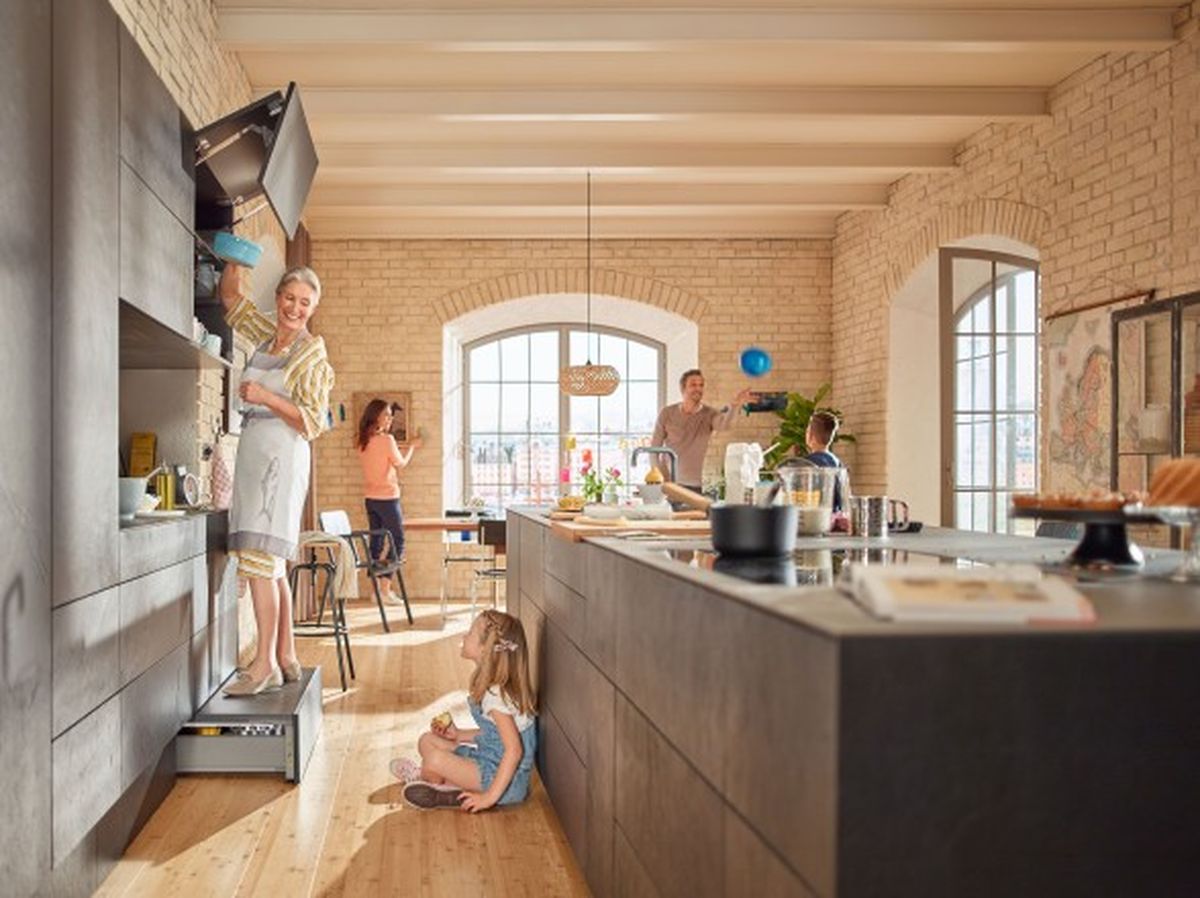
Items stored high in an upper cabinet or on top of a cabinet are more difficult to reach with limited mobility – Julia discovered this too when she was searching for a salad bowl. Climbing on a chair carries a huge risk of injury, but a toe kick solution such as the Blum SPACE STEP offers a safer alternative. The low drawer contains a stable step platform and additional storage underneath.
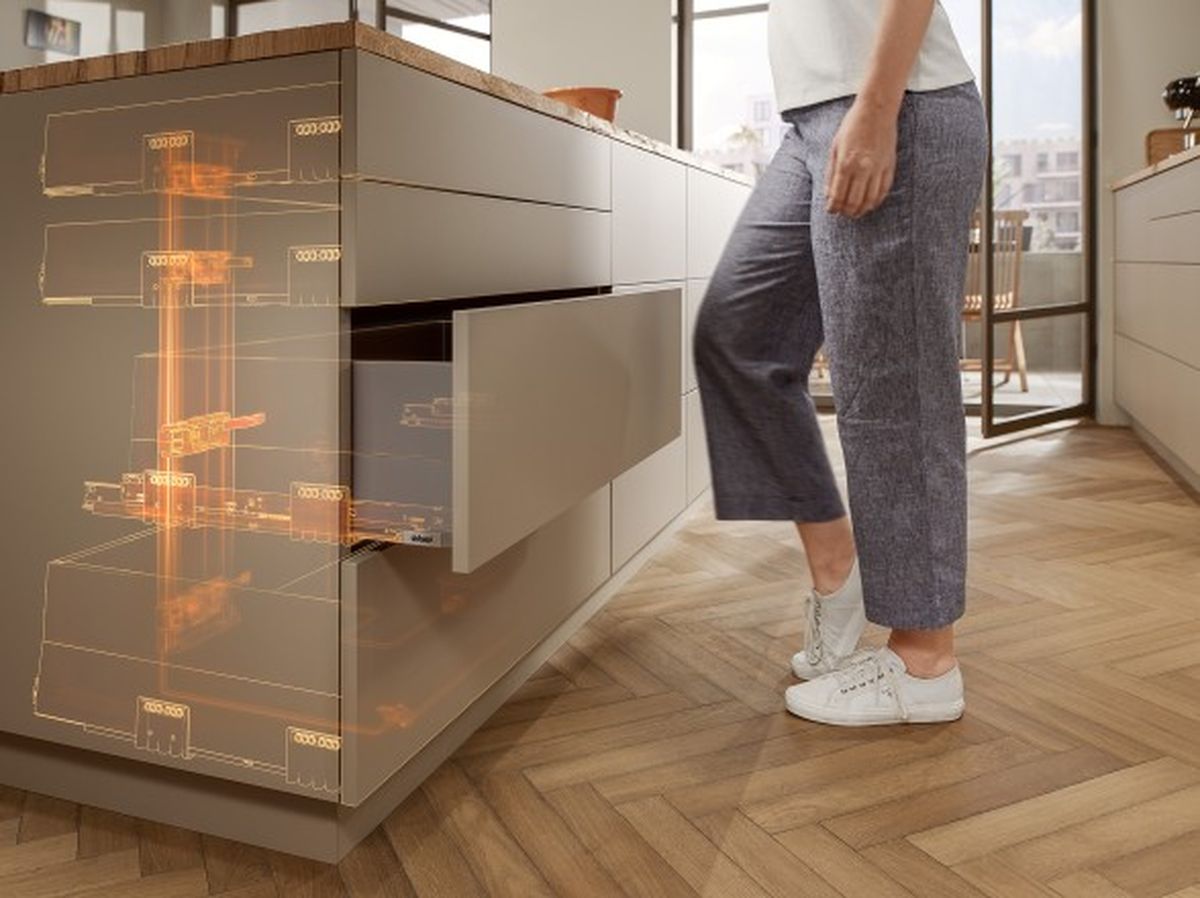
As muscle strength decreases, even small movements become challenging. This is why we developed helpful solutions such as SERVO-DRIVE and TIP-ON BLUMOTION. These electrical and mechanical opening support systems enable cabinets to be opened easily with a light touch. What may seem like an added luxury today can be a huge help in older age.
Julia's conclusion
The experiment is over – and Julia is exhausted. "I never would've thought that this simulation could be so impressive," says Julia, visibly impressed. "These new insights will help me rethink some of the details in my plans, to question and examine them in a different way. We always focus heavily on our clients' needs, but being able to experience such limitations for myself was really valuable."

At a glance: accessibility in building construction
Plan in advance to avoid future obstacles: Anyone (re)designing their home should consider ground level access, wide doors and straight stairs.
Install ergonomic cabinetry: To ensure that movements aren't a strain later in life, helpful solutions such as opening support systems on cabinet doors can be installed today as an added extra.
Ensure good visibility and accessibility: Storage space must be reachable, even in older age. Sufficient lighting is essential, and retractable steps in the toe kick of cabinets can make upper cabinets safer to reach.
Provide wide walking areas: Leaving space for future handles, handrails and mobility aids is important during the planning phase.
Opt for quality interior furnishings: Whoever buys cheap, buys twice. Durable furniture and cabinetry prevent the need for continuous repairs and replacement purchases later.


